What to Do If You're Stuck During a Snowstorm
Stranded in a snowstorm? Learn the safest steps to survive, avoid deadly mistakes, and decide whether to stay in your car or walk for help.
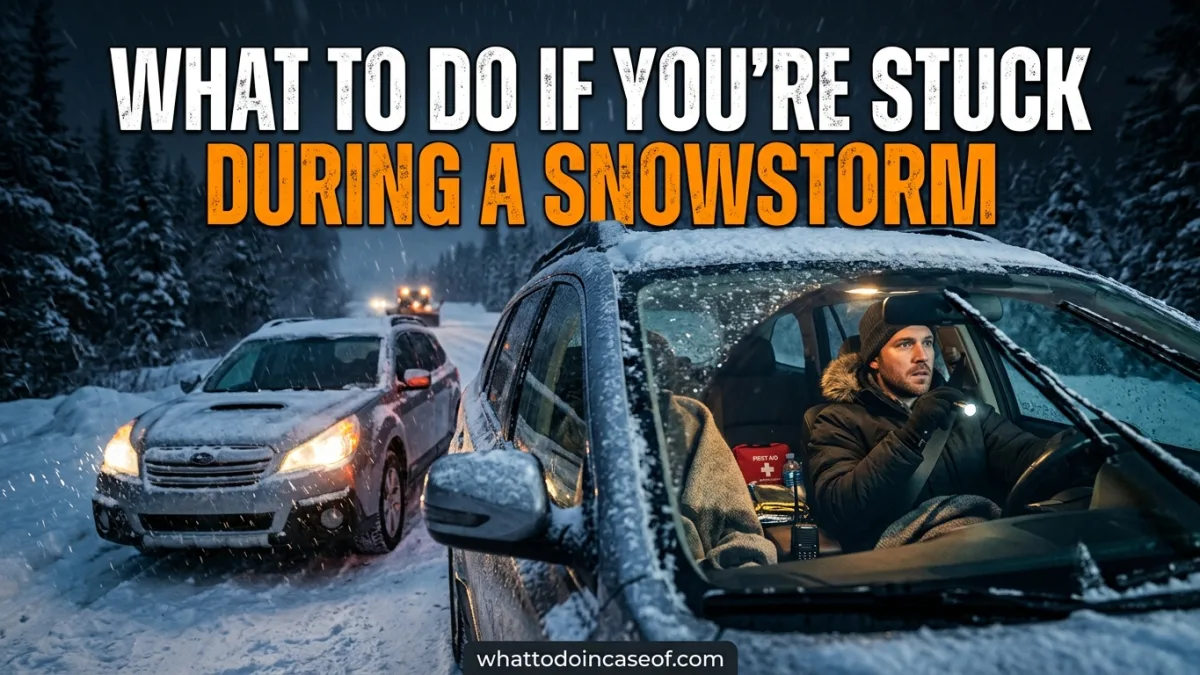
You checked the forecast, you left with plenty of time, and now your windshield is a wall of white. The road ahead has vanished. Your engine temperature is dropping, your phone signal is flickering, and you're wondering how long you can sit here before someone finds you.
If you're reading this from a warm living room, you're preparing wisely. If you're reading this from a car that's no longer moving, you need answers now — and then you need to keep reading so you don't make the next mistake.
Getting stuck in a snowstorm is more common than most people think, and it is rarely about being reckless. It is usually about a forecast that shifted faster than the traffic could clear. This article will show you exactly what to do if you're stuck during a snowstorm, why most people panic into the wrong decisions, and how to turn a dangerous situation into a survivable one.
The Problem: When Whiteout Becomes a Trap
A snowstorm does not announce itself politely. Visibility can drop from miles to meters in minutes. Roads that were merely wet become impassable. What starts as a slow commute turns into a parking lot of stranded vehicles, and suddenly you are part of a situation you did not plan for.
This matters because hypothermia is deceptive. It does not require subzero temperatures. It can begin when the air around you is 40°F (4°C) if you are wet, exhausted, and underdressed. Carbon monoxide poisoning kills silently when drivers run their engines to stay warm without clearing exhaust pipes. And every year, people die because they left their vehicle to walk for help through conditions they could not see through.
The people most at risk are not just adventurers in remote mountain passes. They are commuters on interstate highways, parents picking up children from school, and delivery drivers on routine routes. The common mistakes? Underestimating the storm, overestimating your vehicle, and assuming that because you can see your own hood, you can make it to the next exit.
Why It Happens: The Anatomy of Getting Trapped
Snowstorms trap drivers through a predictable chain of events. Understanding the chain helps you break it.
First, the forecast gap. Meteorologists issue warnings hours in advance, but the human brain discounts distant threats. By the time the first heavy band hits, traffic is already dense. A single jackknifed truck on a highway can strand thousands of vehicles behind it for hours.
Second, the illusion of traction. All-wheel drive helps you accelerate; it does not help you stop on ice. Drivers push forward because their vehicle "feels fine," not realizing that stopping distance has tripled and that the road ahead is a sheet of frozen slush.
Third, the decision cascade. Once you are in stopped traffic, your options narrow with every minute. Turning around becomes impossible. Exiting becomes dangerous. The snow accumulates, plows cannot reach you, and you transition from "delayed" to "stranded" without a clear moment of realization.
Fourth, the energy drain. Cold forces your body to work harder to maintain temperature. Stress accelerates fatigue. If you left the house without a full tank, without winter clothing, or without an emergency kit, the margin for error shrinks fast.
The Solutions: What Actually Works When You're Stuck
If you are stuck during a snowstorm, you have several realistic paths forward. None of them are glamorous. All of them require you to assess your situation honestly.
Solution 1: Shelter in Your Vehicle
What it is: Staying inside your car, conserving fuel, and signaling for help until conditions improve or rescue arrives.
How it works: Your vehicle is a metal shelter. It blocks wind, retains some heat, and makes you visible to searchers. Run the engine for ten minutes each hour to warm the interior, but only after confirming your exhaust pipe is clear of snow.
Advantages: You stay dry, visible, and protected from wind chill. Rescuers expect to find people with their vehicles. You avoid the disorientation of walking in a whiteout.
Disadvantages: Fuel is finite. If your exhaust is blocked, carbon monoxide can enter the cabin. If you are in a remote area and did not tell anyone your route, rescue may take longer than your fuel lasts.
When it makes sense: This is the default choice for most stranded drivers, especially on major roads where plows and emergency services are actively working.
Costs/considerations: None, provided you have fuel. If you are low on gas, run the engine sparingly and rely on insulation — blankets, coats, floor mats — rather than the heater.
Solution 2: Move to a Nearby Building or Shelter
What it is: Leaving your vehicle to reach a gas station, rest stop, hotel, or occupied building within safe visual distance.
How it works: A building offers better insulation, bathroom facilities, and often communication tools. If you can see your destination clearly and the distance is short — under a quarter mile — walking may be safer than sitting in a cooling car.
Advantages: Better warmth. Access to food, water, and charging stations. Psychological relief from isolation.
Disadvantages: Walking in a snowstorm is disorienting. Drifts hide ditches. Wind chill can cause frostbite in minutes. If you misjudge the distance or lose sight of your target, you become a missing person instead of a stranded motorist.
When it makes sense: Only when you can see the shelter, the path is flat and known, you are properly dressed, and you have no reason to believe rescue is imminent.
Costs/considerations: Some shelters may charge for entry or services during emergencies, though most public facilities will not turn people away in life-threatening weather.
Solution 3: Call for Emergency Rescue
What it is: Contacting 911 or local emergency services to request extraction.
How it works: Emergency dispatchers coordinate with state police, National Guard units, and snowmobile rescue teams. They prioritize medical emergencies, but all stranded motorists are logged and aided as resources allow.
Advantages: Professional rescue is the safest way out of a severe situation. You avoid the risks of both driving and walking.
Disadvantages: During major storms, emergency services are overwhelmed. You may wait hours or even overnight. Calling for non-emergency situations can strain systems needed for critical cases.
When it makes sense: When you are injured, out of fuel, without adequate clothing, or in a remote area where self-rescue is not viable.
Costs/considerations: Rescue services do not typically charge for weather-related extractions in the United States, but ambulance transport or tow services afterward may involve fees depending on your location and insurance coverage. Check whether your auto insurance or roadside assistance plan includes towing from snowbound areas — many basic plans do not cover off-pavement recovery.
Solution 4: Self-Rescue by Driving Forward
What it is: Attempting to continue your journey using traction aids, alternate routes, or by following a plow truck.
How it works: Some drivers carry sand, cat litter, or traction mats. Others attempt to follow the tracks of larger vehicles. In light storms, this works.
Advantages: You reach your destination or a safer location without waiting.
Disadvantages: This is where most snowstorm tragedies begin. Pushing forward in declining visibility leads to ditches, collisions, and becoming stuck in a far worse location than where you started.
When it makes sense: Almost never. Only if you are certain the road ahead is clear, you have full traction, visibility is improving, and you are minutes — not miles — from safety.
Costs/considerations: A tow from a ditch costs $100–$300 in normal conditions and significantly more during storm surges. A collision in a storm may involve deductibles, rate increases, and injury costs that far exceed the price of waiting.
The Best Choice: Match the Strategy to Your Situation
There is no universal "best" option. The right choice depends on where you are, what you have, and what you know.
If you are on a busy interstate, have fuel, and are dressed adequately: Shelter in place. Rescue is coming. Your car is your safest bet.
If you are within sight of a known building and properly dressed for wind chill: Walking may be reasonable. But tie a rope to your car if you have one, and do not attempt this in whiteout conditions.
If you are injured, out of fuel, or in a remote area with no cell signal: Try to call for help. If you cannot call, stay with your vehicle and use visual signals — a bright cloth on the antenna, hazard lights when the engine runs — to attract searchers.
If you are considering driving forward: Stop. Unless you have verifiable information that the road is open and safe, the risk-reward math does not favor movement.
Your Step-by-Step Action Plan
If you are stuck right now, do these things in this order.
1. Stop the car safely. Pull as far off the travel lane as possible. Turn on your hazard lights. If you have a reflective vest, put it on before stepping out to assess.
2. Call for help if you can. Dial 911 or your roadside assistance provider. Give your location, route number, nearest mile marker, and condition. Do not hang up until they confirm they have your details.
3. Check your exhaust pipe. Before running the engine, get out and make sure the tailpipe is not blocked by snow. This takes thirty seconds and may save your life.
4. Conserve fuel. Run the engine and heater for ten minutes each hour. Keep a window cracked on the side away from the wind to prevent carbon monoxide buildup and to let in fresh air.
5. Stay visible. Tie a brightly colored cloth to your antenna or door handle. Turn on your dome light when the engine runs so your vehicle is visible in the dark. Use hazard lights sparingly to avoid draining the battery.
6. Insulate yourself. Put on every layer you have. Use floor mats, maps, and even newspapers as additional insulation. Keep moving your arms and legs to maintain circulation. Huddle with passengers for shared body heat.
7. Hydrate and fuel your body. Eat small snacks and sip water if you have it. Dehydration accelerates hypothermia, and digestion generates heat.
8. Do not leave except as a last resort. If you must walk for help, write your name, destination, and time of departure on a note left on the dashboard. This helps rescuers if you do not make it.
9. Wait for daylight if possible. Rescue and visibility both improve with light. If your situation is stable, waiting is often safer than moving in darkness.
Common Mistakes to Avoid
1. Keeping the engine running continuously. You will run out of fuel or poison yourself. Run it in short bursts, check the exhaust, and crack a window.
2. Walking for help in whiteout conditions. You will get lost. The vehicle is a bigger target than a person. Stay with it unless you can see your destination and the path is safe.
3. Using your phone as a flashlight until the battery dies. Preserve battery for emergency calls. Use your dome light or a dedicated flashlight instead.
4. Burning items inside the car for heat. Melting snow on a lighter or burning paper releases toxic fumes in an enclosed space. This is not a camping trip.
5. Assuming all-wheel drive makes you invincible. It does not. It got you into this situation. It will not get you out of a blizzard.
6. Not telling anyone your route before you left. If no one knows where you are, no one knows to look for you. Always share your travel plan and expected arrival time.
7. Drinking alcohol to "warm up." Alcohol dilates blood vessels and increases heat loss. It also impairs judgment. It will make you colder, not warmer.
Expert Takeaway
The most important lesson is this: the storm is temporary, but a bad decision is permanent. Getting stuck in a snowstorm is an inconvenience. Turning that inconvenience into a tragedy is a choice — usually the choice to keep driving, to walk into the unknown, or to assume your vehicle will outlast the weather.
Your vehicle is a shelter. Your fuel is time. Your judgment is your best survival tool. Conserve all three.
FAQ
How long can you survive in a car during a snowstorm? With adequate fuel, clothing, and water, you can survive for days. The vehicle protects you from wind and precipitation. The primary risks are carbon monoxide poisoning, hypothermia from wet clothing, and panic-driven decisions. Conserve fuel, stay dry, and signal for help.
Should you run your engine if you're stuck in snow? Yes, but intermittently — about ten minutes per hour. Always check that your exhaust pipe is clear of snow first, and crack a window to ventilate the cabin. This prevents carbon monoxide buildup while maintaining a survivable interior temperature.
Is it safe to sleep in your car during a snowstorm? It is safer than walking into the storm, but you must manage ventilation and fuel. Sleep in short intervals, keep the engine off while resting, and ensure someone knows your location. If you are exhausted, the risk of carbon monoxide poisoning rises because you may not notice symptoms.
What should you keep in your car for winter emergencies? A winter emergency kit should include blankets, a flashlight with extra batteries, high-energy snacks, water, a first-aid kit, a shovel, traction aids like sand or cat litter, jumper cables, a phone charger, and a reflective vest. Store these items in your vehicle before November.
Will my insurance cover snowstorm towing? Standard roadside assistance plans often cover towing from paved roads, but off-road or deep-snow recovery may require additional coverage. Review your auto insurance policy before winter. Some credit cards and auto clubs offer enhanced winter rescue benefits for a modest annual fee.
Written by
Mohamed IDBRAHIM
I oversee the platform's development, content strategy, quality standards, and overall user experience. My goal is to make WhatToDoInCaseOf.com a reliable and practical resource where people can quickly find clear, useful information about what to do when facing everyday problems, unexpected situations, important decisions, and life challenges. I work to ensure that the platform remains easy to use, accessible, informative, and continuously improved with helpful guides, tools, calculators, and practical resources. Through a focus on clarity, usefulness, and innovation, I am committed to building a platform that helps people better understand their options and take the next step with confidence.
View profileSpotted an error? Report it — we correct mistakes promptly.
Keep reading
Related articles
The emergency kit every home needs — and how to build one in a weekend
A practical, weekend-friendly checklist to build a home emergency kit: the exact items, where to keep it, and the mistakes to avoid.

What to Do If You Have Too Many Things and No Storage - 10 Space-Saving Solutions
Your closet door won't close. There's a box in the hallway you've stepped over three times today. The garage has become a place where things go to be forgotten, not parked.

What to Do If You Want to Walk More Every Day
You already know walking is good for you. That is not the problem. The problem is that knowing it and doing it are two completely different things, and most advice on the subject sounds like it was written by someone who has never once stared at their front door at 6:40 in the morning wondering why…
Related guides
Sandstorm in the desert: what to do?
Sandstorm in the desert: the right reflexes in a few simple steps.
Caught in a rip current while swimming: what to do?
Caught in a rip current while swimming: the right reflexes in a few simple steps.
Parking brake stuck engaged: what to do?
Parking brake stuck engaged: the right reflexes in a few simple steps.