What to Do If Someone Stops Replying to Your Messages
Your message shows two grey ticks. Then nothing. An hour passes, then a day, then a week. You reread what you sent, wondering if you said something wrong, and you check your phone far more often than you'd admit.
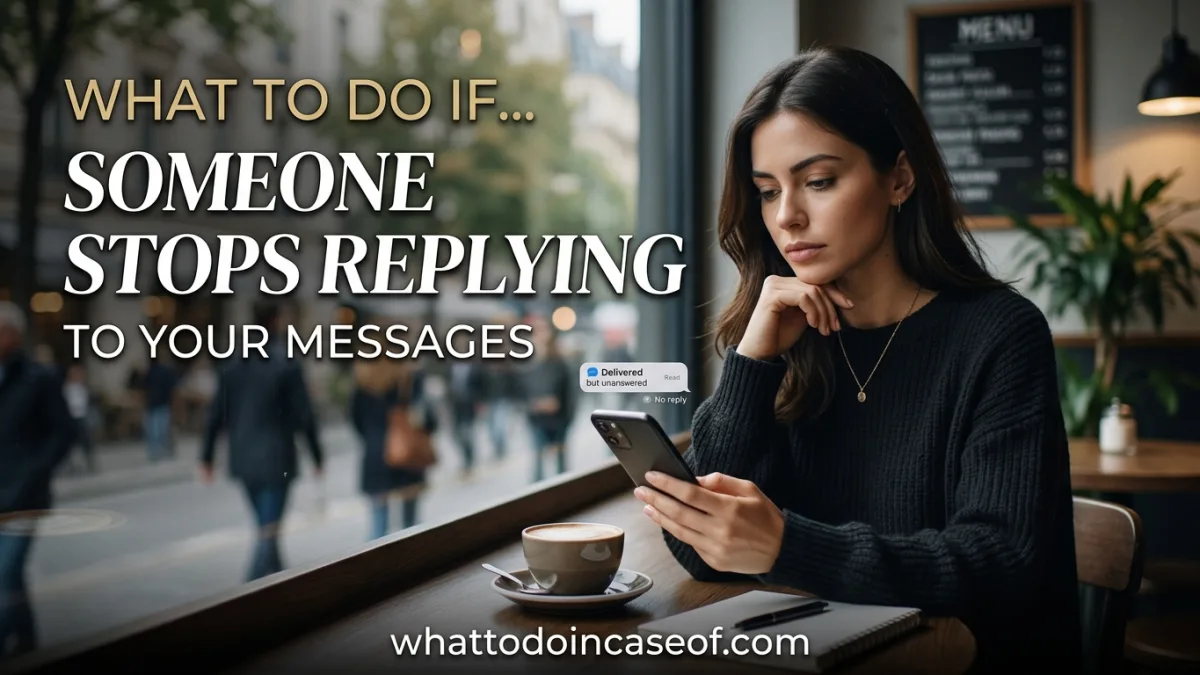
Your message shows two grey ticks. Then nothing. An hour passes, then a day, then a week. You reread what you sent, wondering if you said something wrong, and you check your phone far more often than you'd admit.
If someone has stopped replying to your messages, you are in an uncomfortable but very common spot. The silence is ambiguous, and ambiguity is what makes it sting. This article gives you a clear way to read the situation and a practical plan you can act on today, whether the person is a friend, a date, a family member or a colleague.
The Problem: Silence That Says Nothing and Everything
When someone goes quiet, your brain fills the gap with a story. Often it's the worst one: they're angry, they've lost interest, they're ghosting you. Sometimes that story is right. Often it isn't.
The real problem is that you have no information, so you start treating guesses as facts. You replay the last conversation, hunt for clues in their online activity, and draft follow-up messages you never send. All of that costs you time and peace of mind while changing nothing.
The mistake most people make is responding to silence with more silence or more pressure. Both tend to make things worse. What works is a short, low-stakes check-in, then a clear decision about what you'll do next.
Why Do People Suddenly Stop Replying?
There's no single reason. Here are the ones that come up most, roughly in order of how common they are.
Life got in the way. A work deadline, a sick child, a family emergency, a phone that died. They saw your message, meant to reply later, and later never came. This is boring, and it's the most common explanation.
They're overwhelmed, not upset. Some people go quiet when stressed. They owe replies to six people and answer none of them. It isn't personal, even though it feels that way.
The conversation reached a natural end. You sent a message that didn't really need an answer, like a meme or a "hope you're well." They read it, smiled, and moved on. No reply was ever required.
They're avoiding a specific topic. If your last message asked for money, a favour, a commitment or an emotional conversation, the silence may be about that request, not about you.
Interest has genuinely faded. In dating, this is real and common. Slow replies that turn into no replies usually mean the person has moved on but hasn't said so.
Something is actually wrong. Illness, an accident, a mental health crisis. This is rare, but it's worth keeping in mind before you assume the worst about their feelings toward you.
Your Options, Honestly Compared
Option 1: Send One Short, Low-Pressure Check-In
What it is: A single message that's easy to answer and doesn't demand an explanation.
How it works: Keep it short and specific. Something like: "Hey, haven't heard from you. No pressure, just checking you're okay." That's it. No essay, no guilt, no "I guess you're too busy for me."
Advantages: It clears up the most common cause (life got in the way) and it's kind. It also gives you real information: their response, or lack of one, tells you more than any amount of guessing.
Disadvantages: If they're avoiding you on purpose, you've given them one more message to ignore. That's a small cost.
When it makes sense: Almost always, for the first silence. Give it three to seven days first, depending on how close you are and how urgent the topic is.
Option 2: Wait and Say Nothing
What it is: You stop messaging and let them come to you.
How it works: You put the ball in their court and get on with your life. If they value the relationship, most people eventually reach out.
Advantages: Zero risk of looking needy, and it protects your dignity. It's also the only option that costs you no emotional energy in the moment.
Disadvantages: Some people read silence as a sign you're annoyed, and the gap can become permanent. If you never find out why they went quiet, you may carry the uncertainty for months.
When it makes sense: Low-stakes friendships, casual contacts, people who reply in unpredictable bursts anyway, and any situation where you've already sent one check-in.
Option 3: Switch Channels Once
What it is: Try a different route: a phone call, an email, a message to a mutual friend.
How it works: If their messaging app is broken, they lost their phone, or they've muted notifications, another channel may reach them.
Advantages: Rules out technical and practical explanations fast. A call is also harder to misread than text.
Disadvantages: If you're already on thin ice, showing up on three platforms can feel like surveillance. Use it once, not repeatedly.
When it makes sense: When you have a genuine reason to worry about their safety, or when you need an answer for something practical, like a shared plan or a work deadline.
Option 4: Ask Directly, Then Accept the Answer
What it is: One honest message that names the situation without accusing anyone.
How it works: "I've noticed we haven't talked much lately. If something's up, I'd rather know. If you just need space, that's fine too." Then you stop and respect whatever comes back, including nothing.
Advantages: It ends the ambiguity. You get a real answer or a real silence, and both let you move forward.
Disadvantages: It can feel heavy if the relationship is casual, and it may close a door that was only slightly ajar.
When it makes sense: Close friendships, romantic relationships, family, and any situation where the silence has lasted weeks and is affecting you.
Option 5: Escalate If You Fear for Their Safety
What it is: Treat it as a welfare concern rather than a social one.
How it works: If someone vulnerable has gone silent and you have specific reason to worry, such as a crisis message, a known medical condition or a dangerous situation, contact someone who can physically check on them: a family member, a neighbour, or local emergency services if there's an immediate risk to life. If you're unsure which number applies where you are, our emergency numbers by country page lists them.
Advantages: In the rare cases where something has genuinely happened, fast action matters.
Disadvantages: None, if your concern is real. If it's anxiety talking, a welfare check can embarrass everyone, so be honest with yourself about which one it is.
When it makes sense: Only when there's a concrete reason, not just an unanswered text.
Which Option Fits Your Situation?
There's no single right answer, because the right move depends on who went quiet and why.
If it's a new dating match who fades after a few messages, the honest read is that interest has dropped. Send nothing, or one light message, and move on. Chasing rarely revives it.
If it's a close friend who's never done this before, assume life happened. Send one warm check-in, and if that gets nothing, try a call or ask a mutual friend.
If it's a family member, it's usually worth more patience and a second attempt, because the relationship is long-term and the cost of a misunderstanding is high.
If it's a colleague or client and you need an answer, switch to a channel where work actually happens: email, a call, or their manager if it's blocking a deadline.
If you have a real safety concern, skip the social calculus entirely and go straight to Option 5. Our kids and family safety section covers how to think about welfare checks and who to contact when you're worried about someone.
A Step-by-Step Plan You Can Follow Today
- Wait before you react. Give it three to seven days for a casual contact, longer for someone who's always been a slow replier. Don't send anything while you're angry or anxious.
- Reread your last message. Was a reply actually required? If you sent a link or a "thinking of you," silence may just mean the conversation ended.
- Send one short check-in. Keep it under two lines, warm and low-pressure. No guilt, no interrogation.
- Wait again. Give it another week. This is the hard part, and it's also where most of your dignity is preserved.
- Switch channels once, if it matters. A call or a message to a mutual contact is fine. Three platforms is not.
- Decide what you'll do if nothing comes back. Write it down if that helps: "If I hear nothing by Friday, I'll stop messaging and get on with things." A decision made in advance is much easier to keep.
- Reinvest your energy. Put the time you're spending refreshing your inbox into people who do reply. That's not revenge; it's basic maintenance of your own wellbeing.
- If you fear for their safety, act now. Contact someone who can check on them, or emergency services if there's an immediate risk.
For more decision-making frameworks like this, our practical guides cover everything from awkward conversations to genuine emergencies, and the practical-knowledge blog has shorter pieces on everyday communication problems.
Common Mistakes to Avoid
Sending a second message before the first is answered. Fix: one check-in, then wait. Stacked messages shift the tone from friendly to demanding.
Writing a long paragraph about how hurt you are. Fix: if you need to say it, say it in two sentences, or say it to a friend instead.
Testing them by going silent and watching their every move. Fix: choose silence because it's healthy for you, not as a trap.
Assuming the worst and acting on it. Fix: match your response to what you actually know, which is usually very little.
Asking a mutual friend to spy for you. Fix: ask once, plainly, and only if you have a real reason to worry.
Apologising for something you didn't do. Fix: don't invent a crime just to get a reply. It sets a strange precedent for the relationship.
Chasing someone who has clearly ended things. Fix: accept the answer they've given you, even when it's silence, and put your energy elsewhere.
The One Thing Worth Remembering
You can't control whether someone replies. You can control how many times you ask, how gracefully you handle the answer, and how much of your day you hand over to a notification that may never come. Send one honest message, then live your life. If they come back, great. If they don't, that's information too, and it's better than waiting forever in the dark.
FAQ
How long should I wait before following up?
For most casual situations, three to seven days. If it's urgent or the person is close to you, a day or two is fine. If they're a notoriously slow replier, give it longer.
Should I double text?
Once is fine if it's a short, friendly check-in. Repeated messages before you get an answer usually push people further away.
What if they read my message and still don't reply?
A read receipt only tells you they opened it. It doesn't tell you why they didn't answer. If a read-and-ignore pattern repeats, treat it as a signal about the relationship and adjust accordingly.
Does no reply mean they hate me?
Usually not. It more often means they're busy, overwhelmed or avoidant. That said, a consistent pattern of ignoring you is worth taking seriously rather than explaining away.
When should I worry about someone's safety?
When you have a concrete reason: a distressing message, a known crisis, a medical condition, or a situation that puts them at risk. In that case, contact someone who can check on them, or local emergency services if there's immediate danger. If you need help finding a professional locally, our trusted provider directory is a starting point.
This article is general information about communication and relationships, not professional mental health or medical advice. If the situation is affecting your wellbeing, or you're worried about someone's safety, speak to a qualified professional or contact your local emergency services.
Written by
Emma Richardson
Writer and researcher focused on simplifying financial topics and everyday decisions through clear, practical, and easy-to-follow guidance.
Spotted an error? Report it — we correct mistakes promptly.
Keep reading
Related articles

What to do if...: your reflex guide to life's surprises
Clear, practical guides on what to do in a breakdown, an emergency or an everyday problem — fast answers, the mistakes to avoid, and the sources to trust.

What to Do If You Spend Too Much Time on Your Phone
You reach for your phone to check one thing. Forty minutes later you're watching a video about how to stop watching so many videos. If that sounds familiar, you're in good company, and you're not broken.
Power cut? Here's exactly what to do first (and the mistakes to avoid)
A calm, step-by-step plan for a power outage: what to do in the first minutes, what not to do, and how to stay safe and warm.
Related guides
Fridge smells terrible after a power cut: what to do?
Fridge smells terrible after a power cut: the right reflexes in a few simple steps.
Bird stuck in the chimney: what to do?
Bird stuck in the chimney: the right reflexes in a few simple steps.
What to Do in Case of Anaphylactic Shock? Critical Steps to Save a Life
Learn how to identify and respond to anaphylactic shock rapidly using epinephrine and emergency protocols to protect vital functions. Prompt action during severe allergic reactions saves lives.