What to Do If Your Check Engine Light Comes On
You're driving along, everything's fine, and then that little amber engine icon lights up on your dashboard. Your stomach drops a bit. Is the car about to die? Are you about to be handed a four-figure repair bill?
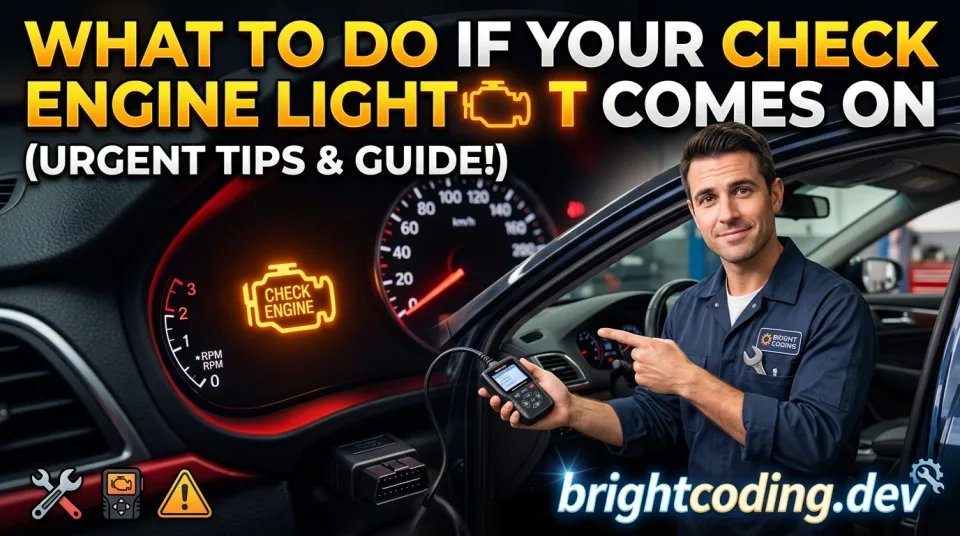
You're driving along, everything's fine, and then that little amber engine icon lights up on your dashboard. Your stomach drops a bit. Is the car about to die? Are you about to be handed a four-figure repair bill?
Here's the good news: a check engine light is rarely an emergency, and it almost never means "pull over right now." It's your car telling you something in the engine or emissions system isn't running the way it should. The trick is knowing which lights mean "keep driving and book a mechanic" and which mean "stop the car."
This guide walks you through what to do if your check engine light comes on, what it's actually telling you, and how to avoid getting talked into repairs you don't need.
First, breathe: is the light steady or flashing?
This one detail changes everything.
A steady check engine light means the car has logged a problem but it's not urgent. You can usually keep driving, though you shouldn't ignore it for weeks.
A flashing check engine light is different. It typically means a misfire is dumping raw fuel into your catalytic converter, which can destroy it fast. That's an expensive part. If the light is flashing, slow down, avoid hard acceleration, and get off the road and to a shop as soon as it's safely possible. If the car is also shaking, losing power, or smelling of fuel, stop driving and call for help.
What the light is actually telling you
Your car has an onboard computer that monitors things like how much air and fuel the engine is burning, how well the exhaust is being cleaned, and whether sensors are reporting sane numbers. When something drifts outside the expected range, the computer stores a trouble code and switches on the light.
That's it. The light is a notification, not a diagnosis. It says "something here is off," and the code narrows down where to look. It does not tell you which part to replace, and anyone who tells you otherwise before running tests is guessing.
This is why the same light can mean a $20 fix or a $2,000 one. The light itself can't tell the difference.
Why it happens: the usual suspects
A loose or faulty gas cap is the most common cause, and the cheapest. If the cap isn't sealing, the system detects a vapor leak and lights up. Tighten it, and the light may clear itself after a few driving cycles.
A failing oxygen sensor is another frequent culprit. These sensors measure oxygen in your exhaust so the computer can adjust fuel mixture. When one goes bad, fuel economy often drops before you notice anything else.
Spark plugs and ignition coils wear out. When they do, you get misfires, rough idling, and that flashing light. Catalytic converter problems are pricier and often show up as a steady light plus a failed emissions test.
Then there's the vague category: vacuum leaks, mass airflow sensor issues, EVAP system leaks, and wiring faults. These can be intermittent, which is genuinely annoying to diagnose.
One more thing worth knowing: sometimes the light comes on for something harmless, like a sensor glitch, and sometimes it's masking a real problem. You can't tell which by looking at it.
Your realistic options
Option 1: Check the gas cap and wait. Tighten the cap, drive normally for a few days, and see if the light goes out. This costs nothing and resolves a surprising share of cases. It only makes sense if the car feels completely normal.
Option 2: Buy or borrow a code reader. A basic OBD-II scanner runs roughly $20 to $50, and many auto parts stores will read your codes for free. You get the code number, which you can look up. The catch: a code tells you the system that's misbehaving, not the exact failed part. It's a starting point, not a verdict.
Option 3: Take it to a shop for diagnosis. A mechanic connects a professional scanner, reads live data, and tests components. Expect to pay for diagnostic time, often in the $75 to $150 range depending on where you live, though some shops waive it if you approve the repair. This is the most reliable path.
Option 4: Keep driving and hope it goes away. Sometimes it does. Sometimes you turn a $200 repair into a $2,000 one. I wouldn't build a plan around it, but if the light is steady, the car drives fine, and you genuinely can't get to a shop this week, you're usually not risking disaster.
Option 5: Clear the code yourself and see if it returns. Clearing a code without fixing anything is like silencing a smoke alarm by removing the battery. If the underlying problem is real, the light comes back, often within a few drive cycles.
If you're not sure where to find a trustworthy mechanic near you, our trusted local provider directory is a reasonable place to start comparing options.
Which option fits your situation
If the light is flashing, or the car is shaking, stalling, or losing power: skip straight to a shop or a safe stop. Don't drive it around town.
If the light is steady and the car drives normally: check the gas cap, get the code read (free at many parts stores), and decide from there. If the code points to something minor and cheap, fix it. If it points to something vague or expensive, get a proper diagnosis before authorizing work.
If you're broke this month: a steady light with a normal-driving car can often wait a week or two. A flashing light cannot. Prioritize accordingly.
If you're due for an emissions test: a check engine light is usually an automatic fail in states that require testing, so you'll need to resolve it first anyway.
The honest answer is that the right move depends on the light's behavior and your car's behavior, not on a single rule.
Step-by-step action plan
- Note whether the light is steady or flashing. This is your first decision point.
- Check how the car feels. Rough idle, shaking, power loss, or a fuel smell means treat it as urgent.
- If flashing or the car feels wrong: reduce speed, avoid hard acceleration, and get to a safe place or a shop. Don't push it.
- If steady and the car feels fine: pull over somewhere safe, shut the engine off, and check that the gas cap is tight.
- Get the code read. Free at many auto parts stores, or use your own scanner.
- Write down the code number and look up what it generally refers to, so you're not walking into a shop blind.
- Get a proper diagnosis if the code points to anything beyond the obvious.
- Ask for the diagnosis in writing, including what was tested and what the actual fault is.
- Get a second opinion on any repair over a few hundred dollars, unless it's clearly urgent.
- Keep the receipt and note the date, in case the same issue returns.
A small habit that pays off: keep a running note of your car's repairs and dates. It's the single best way to spot a shop that's inventing problems. If you like building practical habits like this, the practical-knowledge blog has more along those lines.
Common mistakes to avoid
Panicking and pulling over on a highway. A steady light rarely means stop now. Get somewhere safe first, then assess. Fix: match your response to the light's behavior, not your anxiety.
Replacing parts based on the code alone. A code names a system, not a part. Fix: insist on actual testing before parts get swapped.
Clearing the code to make the light go away. The problem stays; you've just hidden it. Fix: only clear codes after a repair, or to confirm whether an issue returns.
Ignoring a flashing light because the car "still drives." It drives right up until the converter fails. Fix: treat flashing as urgent.
Skipping the gas cap. It's free to check and a common cause. Fix: tighten it and give it a few drive cycles.
Authorizing a big repair without a written diagnosis. You deserve to know what was tested and why. Fix: ask for it, in writing, before you approve anything.
Letting a steady light sit for months. Small problems get expensive. Fix: get the code read within a week or two, even if you delay the repair.
Expert takeaway
The check engine light is a prompt to investigate, not a verdict, and not an emergency, unless it's flashing or the car is misbehaving. Check the gas cap, get the code read, and get a real diagnosis before anyone replaces a part. That sequence alone will save you money more often than any single repair tip.
And if the car ever feels genuinely unsafe to drive, don't gamble with it. Get to safety and call for help. Our emergency numbers by country page lists who to contact if you're stranded somewhere unfamiliar.
FAQ
Can I keep driving with my check engine light on? If it's steady and the car drives normally, usually yes, for a short time while you arrange a diagnosis. If it's flashing, or the car is shaking, stalling, or losing power, no. Get it looked at right away.
What does a flashing check engine light mean? It usually indicates an active misfire, which can damage your catalytic converter quickly. Reduce speed, avoid hard acceleration, and get to a shop as soon as it's safe.
How much does it cost to diagnose a check engine light? Diagnostic fees commonly run around $75 to $150, though many auto parts stores read codes for free and some shops waive the fee if you approve the repair. Prices vary by region, so confirm before you go.
Can I just ignore it if the car runs fine? You can, but a steady light often signals something that gets worse and more expensive over time. At minimum, get the code read so you know what you're dealing with.
Will disconnecting the battery turn the light off? It may clear the code temporarily, but if the underlying problem is real, the light returns. Clearing codes without fixing anything just hides the issue.
Useful Tools for Diagnosing Check Engine Light Issues
If your check engine light comes on, the first step is to identify the possible cause before replacing any parts. Explore our OBD-II Diagnostic Tools to learn more about vehicle diagnostics, understand common engine problems, and find useful automotive resources. You can also check our guides on OBD-II trouble codes to better understand warning lights and make more informed repair decisions.
This article is general information, not professional automotive or safety advice. For anything involving a car that feels unsafe to drive, or for a flashing check engine light, consult a qualified mechanic or your local emergency services.
Written by
Mohamed IDBRAHIM
I oversee the platform's development, content strategy, quality standards, and overall user experience. My goal is to make WhatToDoInCaseOf.com a reliable and practical resource where people can quickly find clear, useful information about what to do when facing everyday problems, unexpected situations, important decisions, and life challenges. I work to ensure that the platform remains easy to use, accessible, informative, and continuously improved with helpful guides, tools, calculators, and practical resources. Through a focus on clarity, usefulness, and innovation, I am committed to building a platform that helps people better understand their options and take the next step with confidence.
View profileSpotted an error? Report it — we correct mistakes promptly.
Keep reading
Related articles
What to Do If Your Car Battery Dies - 8 Steps to Get Back on the Road
You turn the key. Instead of the engine catching, you get a slow, sickly groan, then a click, then nothing. The dashboard lights dim. Somewhere in the back of your mind you already know: the battery is dead, and you're stuck.
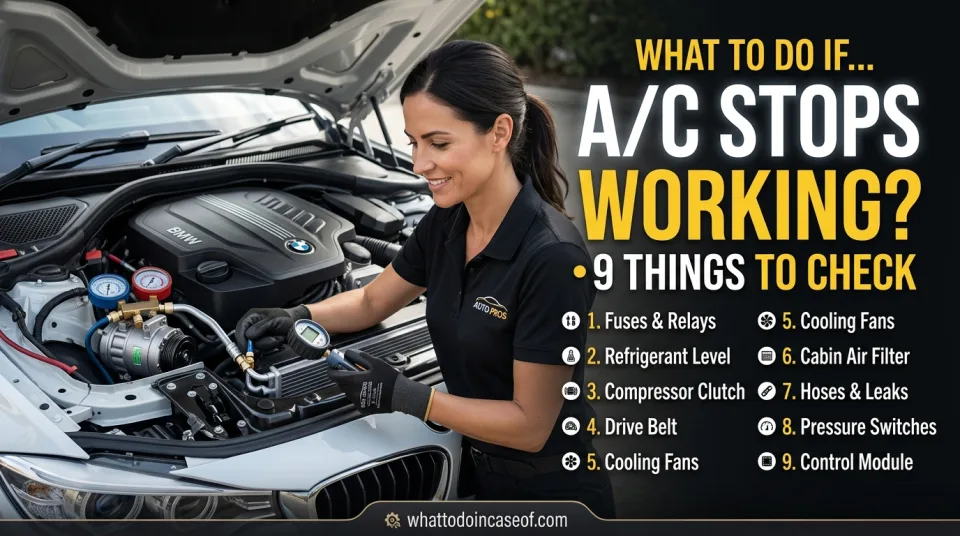
What to Do If Your Car Air Conditioning Stops Working - 9 Things to Check
You're stuck in traffic on a hot afternoon, and the air coming out of your vents is doing a bad impression of a hair dryer. You push the button harder, turn the dial to maximum, and nothing changes. It's one of those small failures that ruins a whole drive, and if you have kids or pets in the back,…

What to Do If Your Child Spends Too Much Time on Screens
Your nine-year-old has been on the tablet since breakfast. You've asked three times for it back. You're tired, you feel like the bad guy
Related guides
What Should You Do If Your Car Makes a Strange Noise? 11 Warning Signs You Shouldn’t Ignore
Unusual car noises can signal anything from a loose heat shield to a failing brake system. Learn the 11 sounds you should never ignore and the safe steps to take when you hear them.
Exhaust smoke colors: what do they mean?
Exhaust smoke colors: the right reflexes in a few simple steps.
Key locked inside the car: what to do?
Key locked inside the car: the right reflexes in a few simple steps.